Multistage Submersible Pump Working Principle and Provided Discharge Power
As an explanation of the working principle of a multistage submersible pump, we can say it will have a number of impellers positioned on the same pump shaft and it will increase the provided power of the pump
The pump cover and liquid guiding device will be located on the discharge of the impeller
But how exactly does one go about attaching or removing the impeller assembly from the pump body? There are two different ways to take here
The first benefit is that it makes it possible to separate the pump housing and the flow guiding device into an upper half and a lower half by dividing them horizontally along the axis of the pump shaft
The alternative approach involves cutting the pump body and the fluid guidance device into numerous sections in the direction of the pump axis between the moving wheels in a plane that is perpendicular to the pump axis
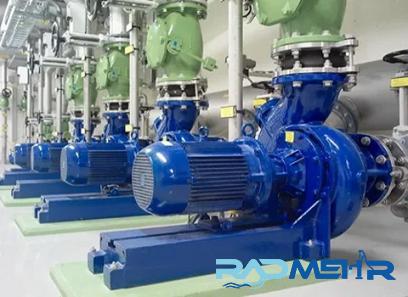
This kind of pump is referred to as a horizontal multistage centrifugal pump
Multistage centrifugal pump
The pump is supported by a helical pump body, and each of its corresponding helical impellers is located on the circumference of the body
This configuration is analogous to putting numerous single-stage scroll pumps in sequence on the same shaft, and it is also known as a multi-stage screw pump
Since the body of the pump is horizontally divided, both the suction port and the discharge port are directly poured into the pump body, making inspection much simpler
By removing the lid of the pump, the rotor can be revealed in its entirety
When inspecting the rotor, it is necessary to examine the complete rotor
Taking apart the connection pipe before lifting is not required in any way
Because these pumps’ impellers are often organized in an even pattern and the majority of the axial forces are already balanced, axial balancing mechanisms are not typically required to operate them
The flow rate of the horizontal multistage pump can be anywhere between 450 and 1500 m3/h, and its head can reach up to 1800 MHz
The size of the single-stage pump is greater than that of the multistage pump because the impeller is arranged in a symmetrical pattern and the pump body contains a cross-flow passage
Pouring is difficult, and the valve position is set to a high position, despite having the same performance
When the pressure is at its maximum, the pump, the pump body, and the pump cap are all elevated to their maximum positions
Sealing with the connecting surface of the pump body is difficult to achieve
When the pressure is relatively high, a centrifugal pump with multiple stages is typically utilized
The pump is a multistage pump that is vertically split into several sections
It has a front segment, a rear section, and a series of sections in the middle that are held together by four long screws
The number of stages that a centrifugal pump has can be determined by looking at the number of impellers that are mounted on the pump shaft
Every lifter in the center part has a hand wheel that may be turned by the user
The function of the flywheel is essentially analogous to that of the flute, which is primarily to transform kinetic energy into energy that is steady under pressure
In most cases, the impeller has a single suction and the suction assembly can only be pointed in a single direction
A balancing disc is positioned behind the end portion of the component in order to equalize the axial force
A compensating pipe connects the disc to the inlet of the front section of the component
During the running process, the rotor is allowed to tilt to the left and right along the axial direction
The axial force of the impeller assembly is balanced by pushing on the balance disc in order to keep the rotor in a position that is relatively near to the position of balance
There are shaft seals located at both the beginning and end of the shaft
The shaft is supported at both ends by bearings that are housed within the bearing housing
Multistage Pump Discharge Power
The amount of liquid that a multistage pump is able to move through it in a specific amount of time is referred to as its flow rate or discharge power
Knowing the flow rate of your pump can assist you in accomplishing two primary objectives:
You are able to determine whether or not your system is operating at an efficient level
You will be able to establish whether or not your system is functioning poorly if you are aware of the expected throughput in addition to the present throughput
This enables you to take the appropriate actions to improve the operation of the pump
You have the ability to select the appropriate configuration needed to transfer fluid or liquid in the volume that you demand
Having an understanding of the required flow will help you plan the system design precisely before contacting the multistage centrifugal pump manufacturers in India for your purchase requirements
These manufacturers can help you choose the appropriate pump for your needs
If you make an error in calculating the required flow, you will end up installing a pump with either a large or small volume, which is not a wise investment for the long run
As a result, prior to placing an order for the best pumps in India from your preferred manufacturer, you ought to have a crystal-clear understanding of the desired flow rate
Which type of liquid should be pumped: one that is clear or one that is viscous? What exactly is the temperature of the fluid that is being pumped? etc
The required travel distance for the liquid to complete its journey
The amount of liquid that must be transferred in a specific amount of time
Your specific industrial requirements will determine how these three aspects vary
The volume of fluid you want to convey determines the pump flow rate
The velocity of flow that you are capable of doing is heavily impacted by the kind of fluid that is being transported and the distance that it must cover
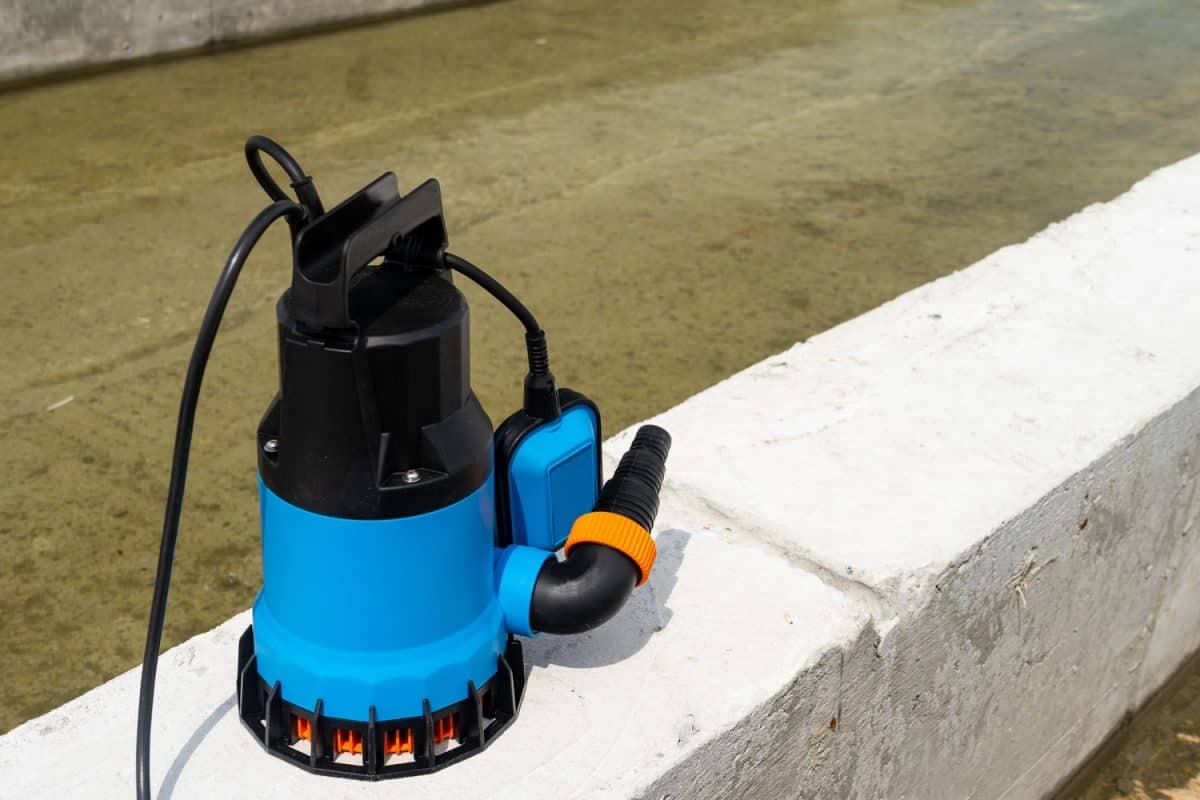
As a result, these three considerations play a significant part in establishing the size and category of pump that will be necessary
We highly recommend contacting a pump sizing specialist to help you determine the proper equipment to purchase
At our company, we provide complimentary pump sizing assistance to all of our customers in order to help them in locating the most convenient pumps available in India for their particular requirements
Calculating the needed flow rate for your pump is a pretty straightforward process
Suppose you wish to transfer 300 liters of fluid every 30 minutes; in this case, the pump system needs to move 300/30 = 10 liters per minute, which is equivalent to 0
167 liters per second
This is the necessary flow rate, which is often computed before the installation takes place
After the pump has been installed, you should make it a habit to check the flow on a regular basis to establish whether or not the pump is functioning well
Keeping an eye on a few different elements will allow you to control the performance of the pump
At this tip, all that remains is to compute the return
It is necessary to connect the pump such that it is parallel to the shaft in order to create a multistage centrifugal pump that has a high flow rate
It is clear from the explanation that the two pumps share a tube that allows them to be linked in parallel with one another
Now the water is being taken from a shared pump by both pumps, and then it is being discharged through a shared tube that is connected to both pumps
Every pump operates in opposition to the same head
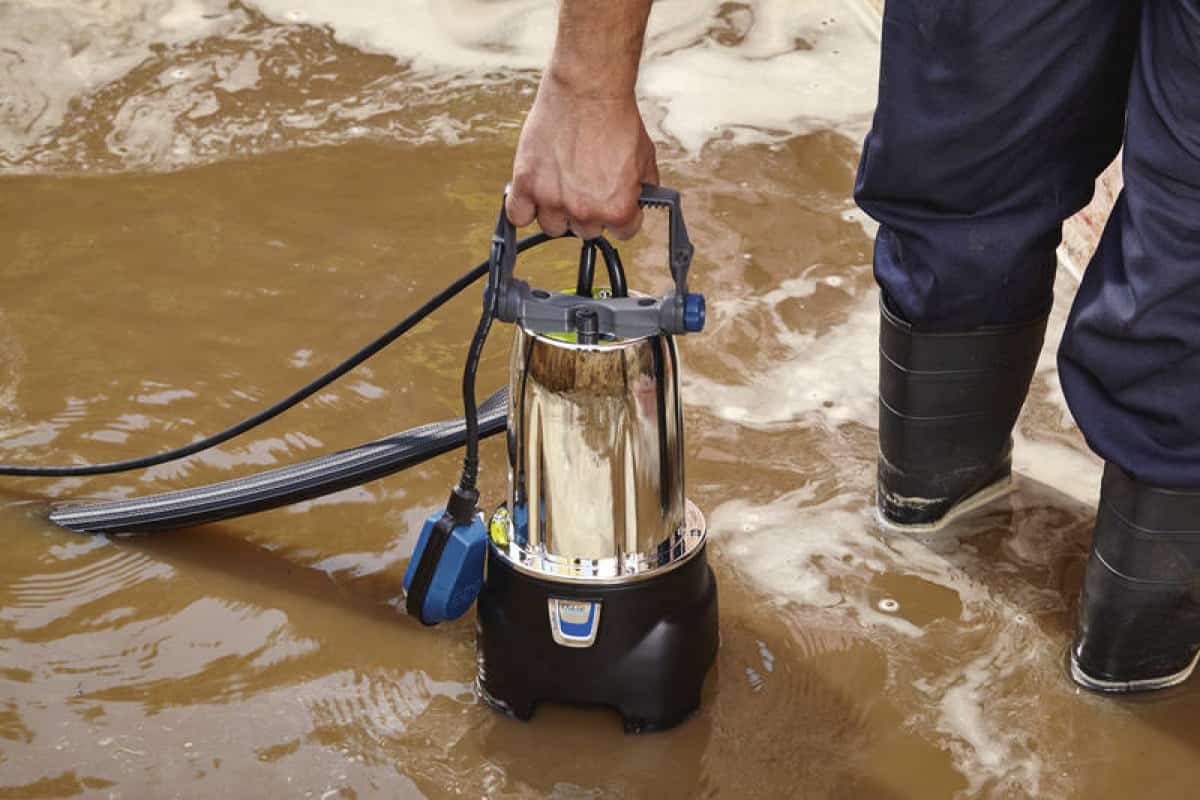
Submersible Pump Working Principle
The mining industry, water well drilling, and the maritime sector were the first target markets for the development of submersible pumps due to their working principle
The design of the pump was modified throughout time to accommodate its use in oil wells, which made the modification viable
Many different kinds of submersible pumps have been developed as a result of further advancements made to the Arutunoff concept, and these pumps are currently used in a wide variety of industries
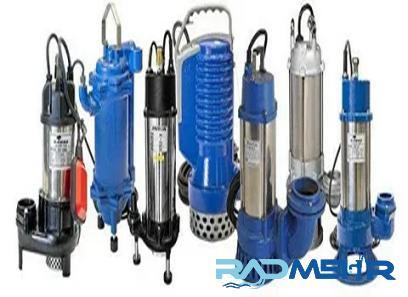
electric water pump that operates when it is completely submerged, as the name suggests
The electric motor has been hermetically sealed, and it is secured to the pump in a tight connection
The developers of these pumps are able to create a number of different sorts of water pumps across the board that are ideal for immersion
These pumps contain motors that are encased in oil-filled components but have no other connection to the substance that powers them
This pump operates according to the premise that it turns the energy that is being circulated into the energy that is being kinetic, and then finally into the energy that is being pressured, which brings water to the surface from deeper below
To do this, first water must be drawn into the water pump, and then the spinning of the impeller must be used to guide the water through the dispenser
This means that it continues beyond this point
These pumps are vertical centrifugal pumps that have multiple stages
The fluids that have had their volume enlarged by the impeller give up their kinetic energy at the diffuser, which then converts the kinetic energy into pressure
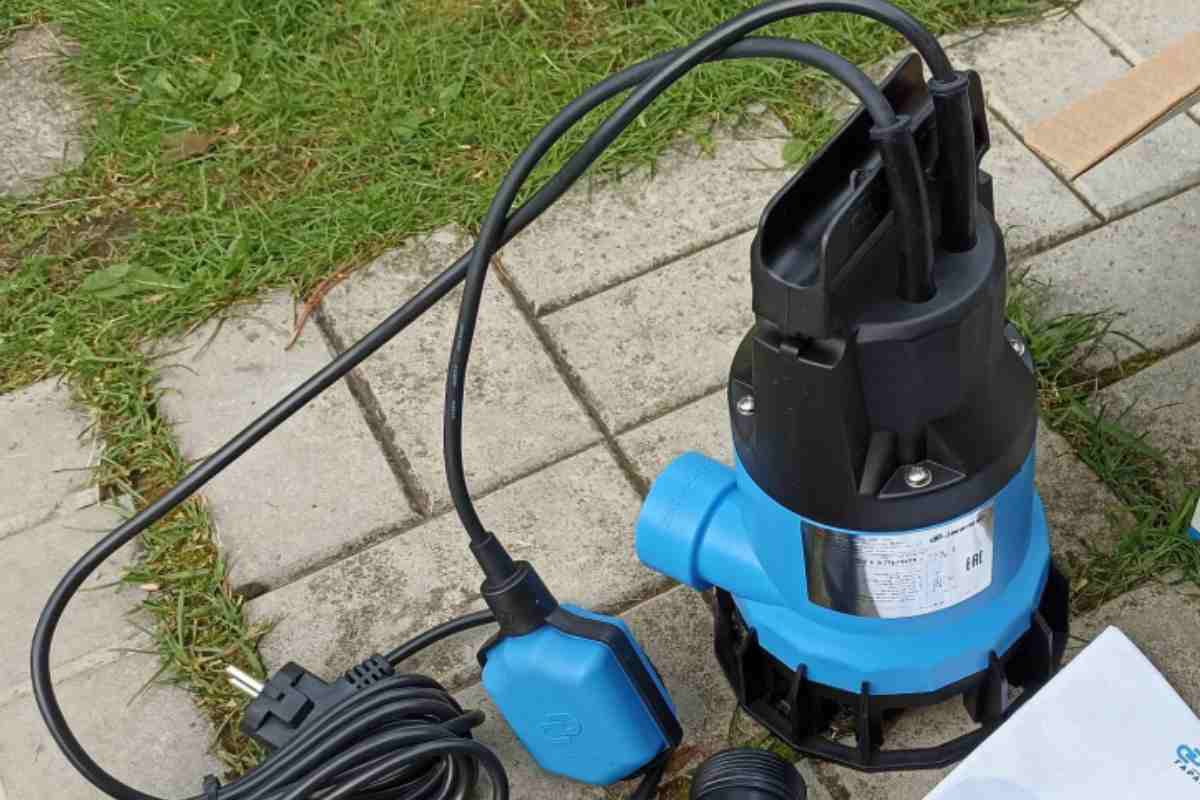
This is the fundamental working concept of radial pumps and mixed flow pumps
When it comes to hydraulic submersible pumps, the motor is of the non-electric hydraulic type, and the fluid that runs the motor is kept separate from the fluid that is produced by the system when it is in the closed loop state
In the open loop, the liquid that is produced will combine with the power liquid that is isolated on the surface
A mechanical connection can be found underneath the pump, and it is used to link the pump shaft to either the casing or the gas separator
After passing through the suction strainer, the liquid is sucked into the pump where it is later hoisted by the pump levels
Other components include rings that are located along the shaft and serve the purpose of providing radial support for the shaft
In most circumstances, the thrust bearing is responsible for picking up some of the axial forces that are created in the pump
However, the shield thrust bearing is the component that is primarily responsible for doing so
Even more specialized submersible pump screws exist, each featuring a steel screw in the role of the active component
These screws come in a variety of configurations
This screw makes it possible for the pump to operate water even in extremely polluted environments